18 October 2026
Finding Your Flow: The Best Notebooks for Writers Who Take Their Craft Seriously
Presented by @notebookswritersmag
I have been at this writing thing for over thirty years. In that time I have filled hundreds of notebooks, maybe thousands if you count the half-used ones that live in a cardboard box under my desk. Every writer I know has their own relationship with paper. Some treat notebooks like disposable scratch pads, grabbing whatever is cheapest at the drugstore. Others treat the choice as a ritual, a small act of devotion before the real work begins. I fall somewhere in between, but I have strong opinions. After decades of testing everything from spiral-bound composition books to hand-stitched leather journals, I can tell you that the right notebook matters more than most people admit.
For years I believed the tool was irrelevant. I wrote in whatever was handy. Moleskine, Field Notes, legal pads, the back of envelopes. But over time I noticed that certain notebooks made me want to write, while others made me avoid the page. The paper quality, the binding, the size, the way ink dries on the page - all of it feeds into something we rarely talk about: the psychology of getting started. When I finally sat down to sort through my collection and identify what actually worked, I realized that the best notebooks for writers are not about luxury or status. They are about removing friction.
If you are a writer who has ever stared at a blank page and felt that familiar knot in your stomach, you know what I mean. The notebook itself should be an invitation, not an obstacle. It should make you want to pick up a pen and say something. That is the standard I use when I recommend anything on this site.
Paper Quality Is Everything
The first thing I look for in a notebook is the paper. You can have the most beautiful cover in the world, but if the paper bleeds through with a Pilot G2 or feathers under a Lamy Safari, you will never use it. I learned this the hard way. I bought a gorgeous notebook from a small brand years ago, the kind with a ribbon bookmark and an elastic closure. The first page I wrote on bled so badly I could see my words on the desk below. I never opened it again.
Tomoe River paper is my gold standard. It is thin enough to keep the notebook slim, yet handles fountain pen ink with almost no bleed-through. The Hobonichi Techo uses Tomoe River, and that is one reason it has such a devoted following. The Midori MD also uses excellent paper, slightly toothy in a way that gives your writing a tactile quality. Clairefontaine and Rhodia both make notebooks with coated paper that performs well under heavy ink. If you use fountain pens, these brands should be on your short list.
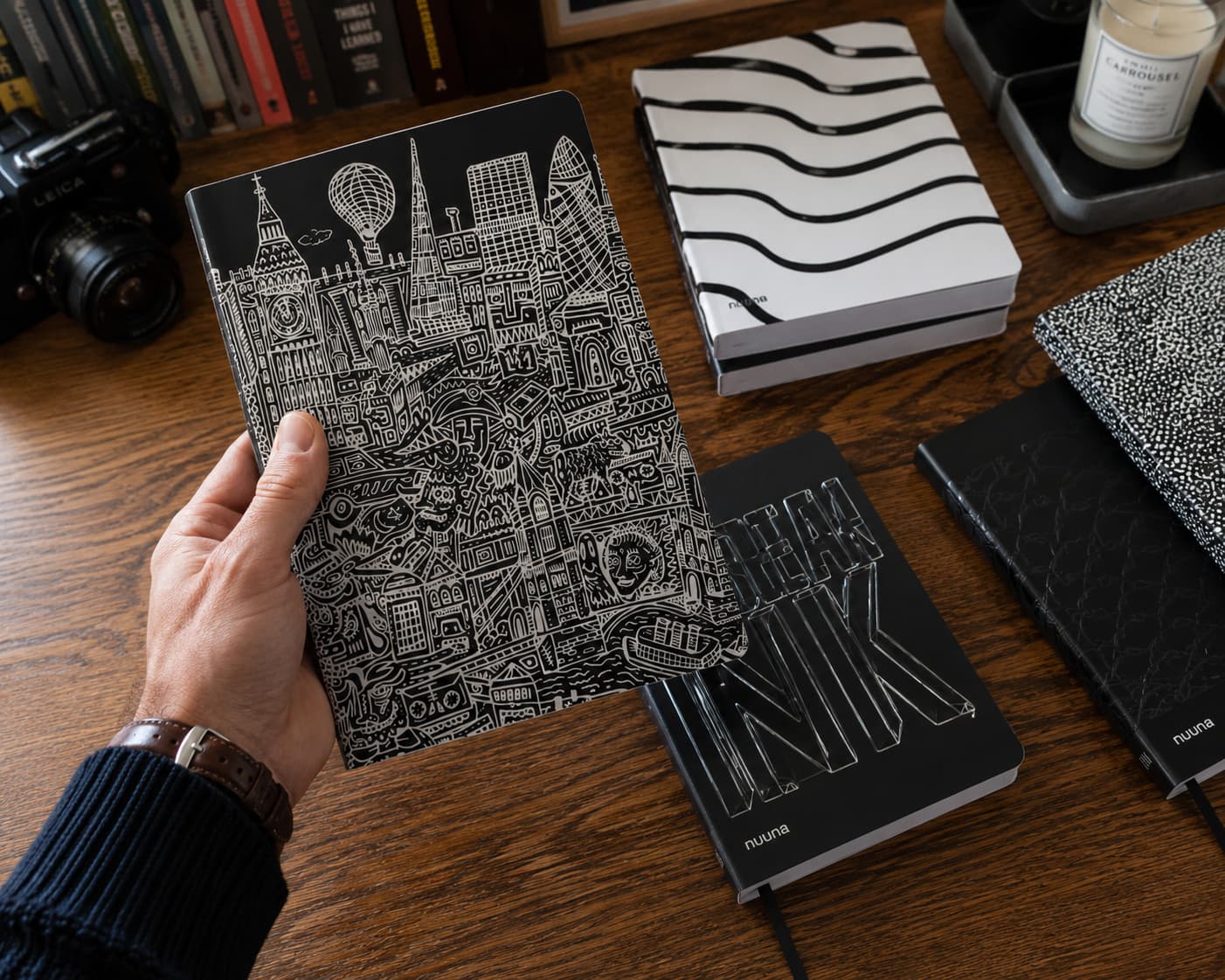
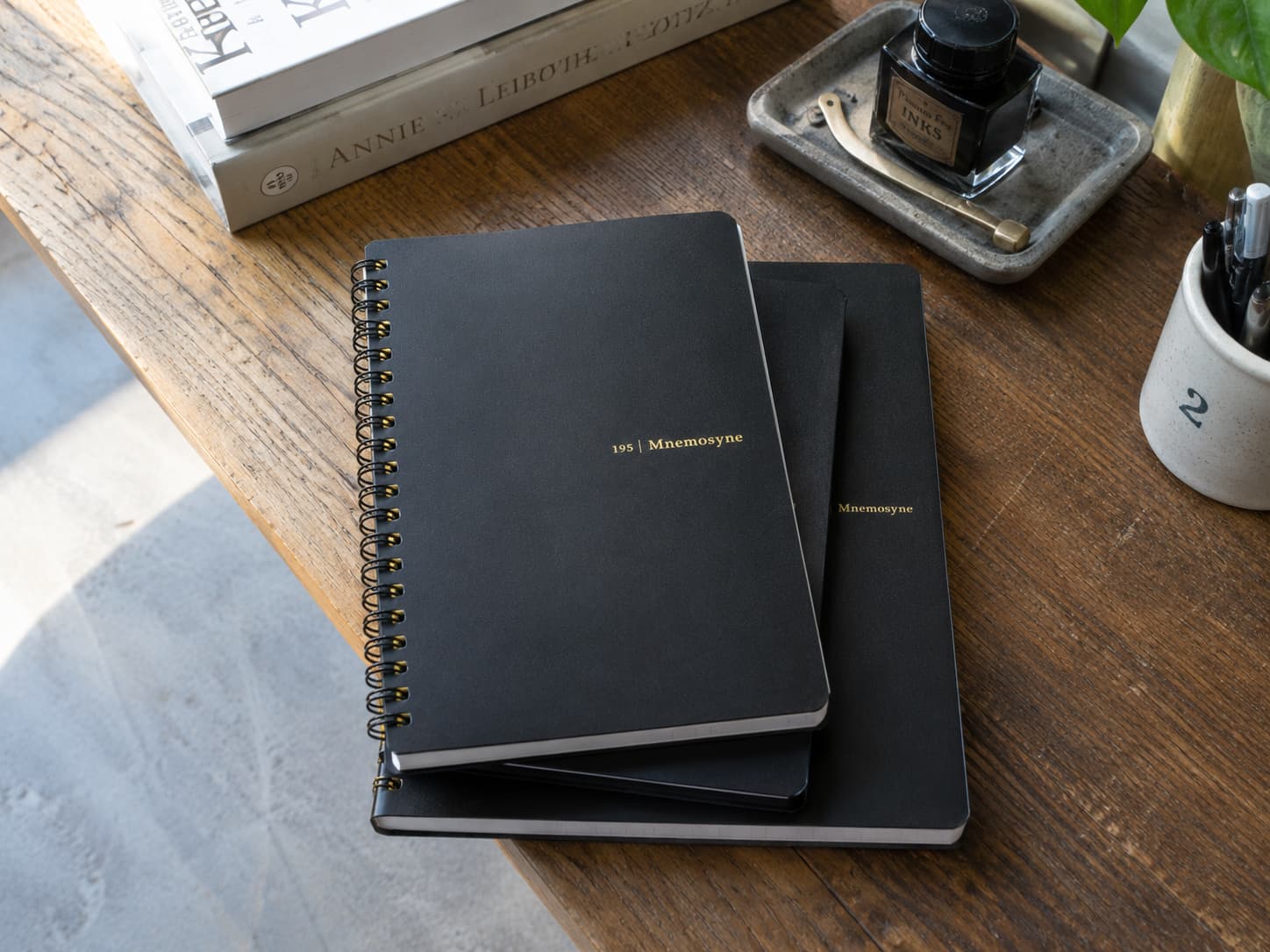
For ballpoint or gel pen users, the choices are wider. Doane Paper makes a lovely uncoated stock that works well with most pens. Exacompta offers a range of journals with smooth, silky paper that handles the Pilot G2 beautifully. And Maruman Mnemosyne notebooks have become a favorite of mine for their crisp, white pages and near-invisible ghosting. The point is simple: do not settle for paper that fights your pen. You have enough to fight on the page.
Size and Portability
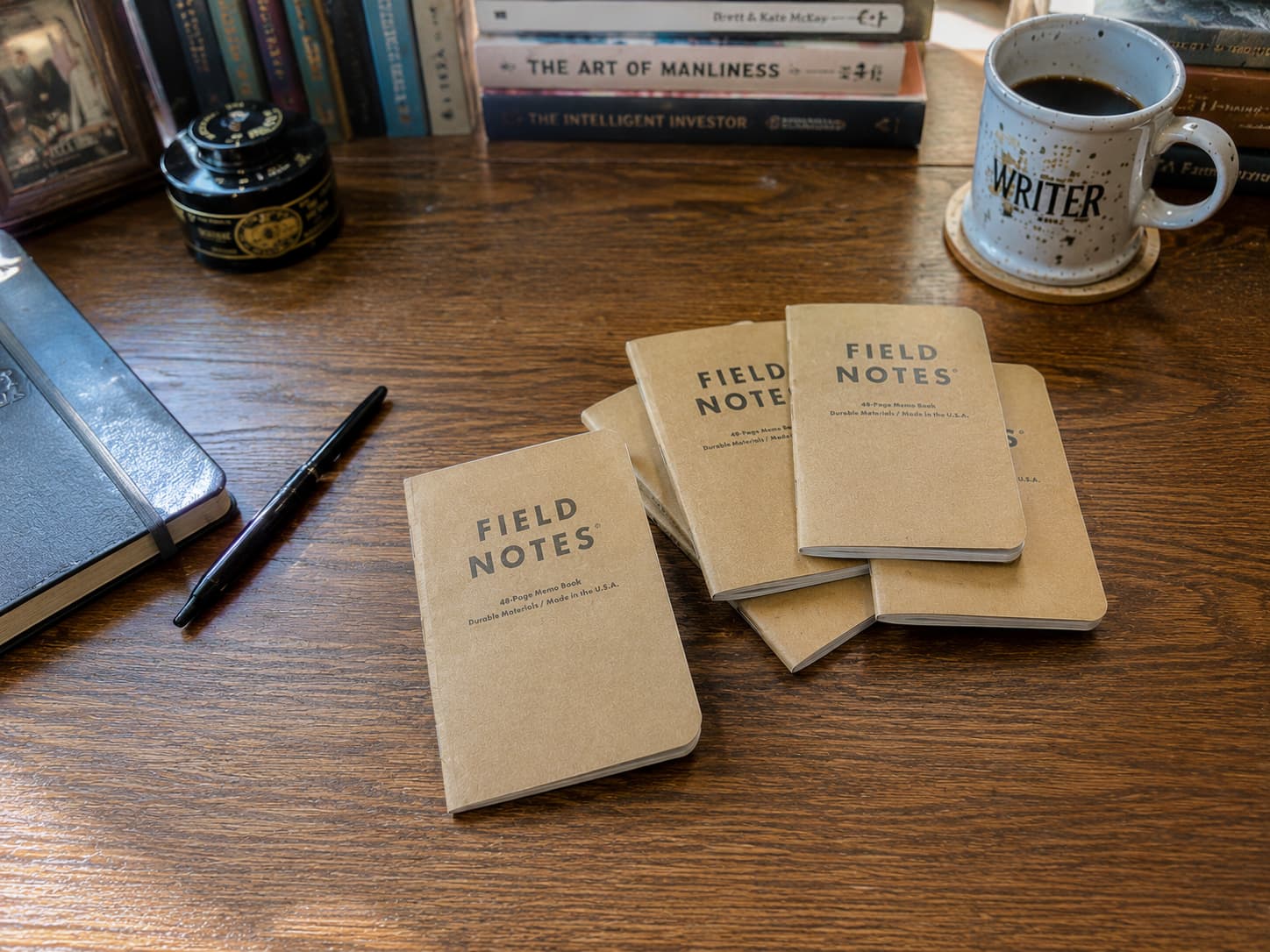
The second factor is size. I keep a pocket notebook on me at all times, usually a Field Notes or a small Kokuyo. These fit in a back pocket or a jacket pocket and are perfect for capturing lines of dialogue, overheard conversations, or sudden ideas. But for longer work - drafting scenes, journaling, working through a plot problem - I need something larger. A5 is my sweet spot. It gives you enough room to write several paragraphs without turning the page, but it still fits in a bag. The Leuchtturm1917 in A5 is a classic for a reason. It lies flat, the pages are numbered, and there is a table of contents at the front. I have used them for everything from NaNoWriMo planning to daily Morning Pages.
Morning Pages, by the way, are the three pages of longhand stream-of-consciousness writing recommended in Julia Cameron's The Artists Way. I have done them on and off for twenty years. For a practice like that, you need a notebook that can take a beating. The Leuchtturm1917 holds up well. So does the Baron Fig Confidant, which has a slightly stiffer cover and lies flat even when you are near the middle of the book.
If you travel a lot, consider the Hobonichi Techo. It is compact, lays flat, and the paper handles fountain pen ink beautifully. I used one during a long trip last year and filled it with notes, sketches, and half-formed ideas. By the end I felt like the notebook knew me. That sounds silly, but any writer who has finished a journal will understand.
Binding and Durability
A notebook that falls apart after a few weeks of use is a tragedy. I have had spiral bindings snap, glued spines crack, and covers bend beyond recognition. The best notebooks for writers use either sewn bindings or high-quality lay-flat construction. The Midori MD uses a thread-stitched binding that holds up to repeated opening and closing. The Leuchtturm1917 uses a combination of glue and stitching that keeps the pages secure. I have never had a page fall out of a Rhodia Webbie, and I have put them through heavy use.
One exception to the durability rule is the Rocketbook. It is a reusable notebook with special paper that erases when you microwave it. I know a few writers who use it for brainstorming because they do not feel precious about the pages. But I find that the act of erasing removes something important. For me, writing is about leaving a record, even if that record is messy. I want to see my mistakes, my crossed-out words, my terrible first drafts. That is where the growth happens.
The Problem of Writer's Bloc
Every writer I know has experienced writer's bloc at some point. It is a frustrating, demoralizing state where the words simply will not come. I have found that changing my notebook can sometimes break the spell. If I am stuck, I switch from a lined page to a blank one, or from a hardcover to a softcover, or from a large notebook to a pocket-sized one. The physical shift seems to unlock something in my brain. When I am truly blocked, I reach for a Field Notes memo book. The small space feels less intimidating. I can fill a page quickly and feel like I accomplished something.
The practice of Morning Pages is designed specifically to combat writer's bloc. By forcing yourself to write three pages of whatever comes to mind, you bypass the internal critic and build momentum. I have seen it work for dozens of writers over the years. The key is to use a notebook that makes the process easy. If your notebook feels precious or expensive, you might hesitate to fill it with garbage. That is why I recommend something like the Maruman Mnemosyne or the Kokuyo Campus notebook for this practice. They are affordable, well-made, and easy to replace.
My Personal Rotation
I keep four notebooks in rotation at any given time. One is a Leuchtturm1917 in A5 for longhand drafting and project notes. One is a Hobonichi Techo for daily planning and quick journal entries. One is a pocket-sized Field Notes brand notebook for capturing ideas on the go. And one is a Midori MD for the kind of writing that feels more personal, the stuff I might want to keep for years. Each serves a different purpose, and each has earned its place through months or years of use.
I have also used the Baron Fig Confidant extensively. It has a nice balance of structure and flexibility. The pages are slightly cream-colored, which is easier on the eyes for long writing sessions. And the dot grid option gives you the freedom to write, draw, or make lists without the constraints of ruled lines. I have recommended it to several friends who were just starting their Morning Pages practice, and they all thanked me later.
Practical Advice for Choosing
If you are new to the world of quality notebooks, start with one brand and use it for a month. Then try another. Pay attention to how each one makes you feel when you open it. Does the paper feel good under your pen? Does the notebook lie flat so you can write without fighting the spine? Do you look forward to using it? If a notebook sits on your shelf untouched for weeks, it is not the right one for you.
I have wasted money on notebooks that looked beautiful but performed poorly. I have also bought cheap notebooks that turned out to be surprisingly good. The Exacompta notebooks, for example, are affordable and reliable. The Clairefontaine notebooks are a step up in paper quality but still reasonably priced. And the Maruman Mnemosyne line offers a professional feel at a mid-range price. There is no single best notebook for every writer. But there is probably a best notebook for you.
When people ask me for recommendations, I always say the same thing: think about what you actually need to write, not what looks good on Instagram. A notebook that sits empty because you are afraid to mess it up is a waste. A notebook that you fill with bad drafts, crossed-out sentences, and half-formed ideas is a success. That is the real test of the best notebooks for writers. They get used.
I have been writing long enough to know that the tool does not do the work. But the right tool can make the work feel easier. When I use a notebook that fits my hand, lies flat, and accepts whatever pen I grab, I write more. I write faster. I enjoy the process more. And that is the whole point. The best notebooks for writers remove the barriers between the writer and the page. Everything else is secondary.
So go find yours. Try a few. Write in them. Mess them up. Fill them with the kind of messy, imperfect writing that eventually becomes something real. That is what they are for.